Why Opsby
The jobs can be the same. The way they get done isn't.
Who decides, who tells whom, where it gets written down, what counts as finished — that part is different in every business, and nobody designed it in one sitting; it took shape season by season. Opsby is written for exactly that space: it doesn't touch the way you already work; it only keeps what has been agreed in one place.
Every business runs differently
Same route, two companies. In one, dispatch assigns the vehicle and only then tells the person who sold it; in the other, the seller confirms the customer first and asks about seats after. Neither is more correct — the correct one is the one that already works with your people, your customers and your suppliers. Where a business gets pushed into a standard process, somebody usually ends up working differently than they always have, just to fit the software.
- Who gets to see cost, and who only needs the selling price.
- How much deposit makes a booking firm.
- Which suppliers are paid per trip, and which settle at the end of the period.
- What step makes a trip finished.
Kéo ngang để xem hết ảnh →
The tools you already use are not the villain
Zalo, Excel and Google Sheets, the sales channels, the phone in your pocket — each of them does exactly the job it was made for, and does it well: quick and familiar. Opsby sets no conditions about where you talk to each other.
- Zalo: where customers message you and where the team calls each other — everyone already has it.
- Excel and Google Sheets: flexible enough that almost anything can be put together in one afternoon.
- Sales channels: where customers find you and where a booking gets closed.
- The phone: when the boat is late and the plan has to change on the spot, one call is still faster than typing.
The gap sits between the tools
The problem is rarely inside any one tool; it sits at the hand-offs: the customer moved the time somewhere in a chat thread, the trip that was already arranged lives in the dispatcher's head, the deposit is one row in a file, and what is owed to the supplier only gets added up at the end of the period. Nobody did anything wrong — it is that no single place holds enough context for the next person to pick the work up without asking from the start.
Kéo ngang để xem hết ảnh →
Ops + by
Ops is the work that has to happen. By is the way your business organizes itself to do that work — who does it, in what order, and at what point it counts as done. Opsby holds the Ops part steady, and leaves the by part to you.
- Booking: what the customer agreed to, at what price.
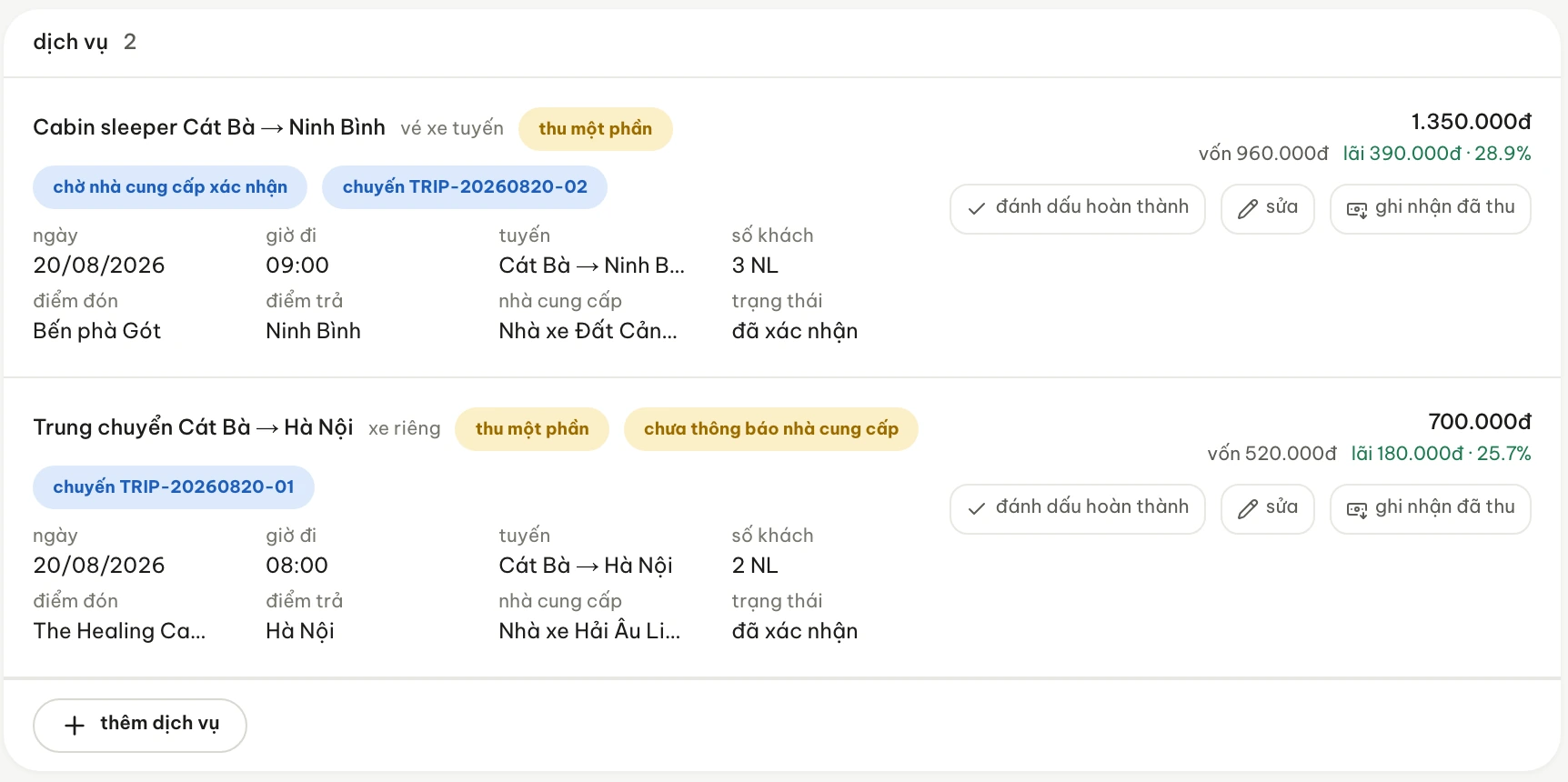
- Services: which services that booking contains, and who supplies each one.
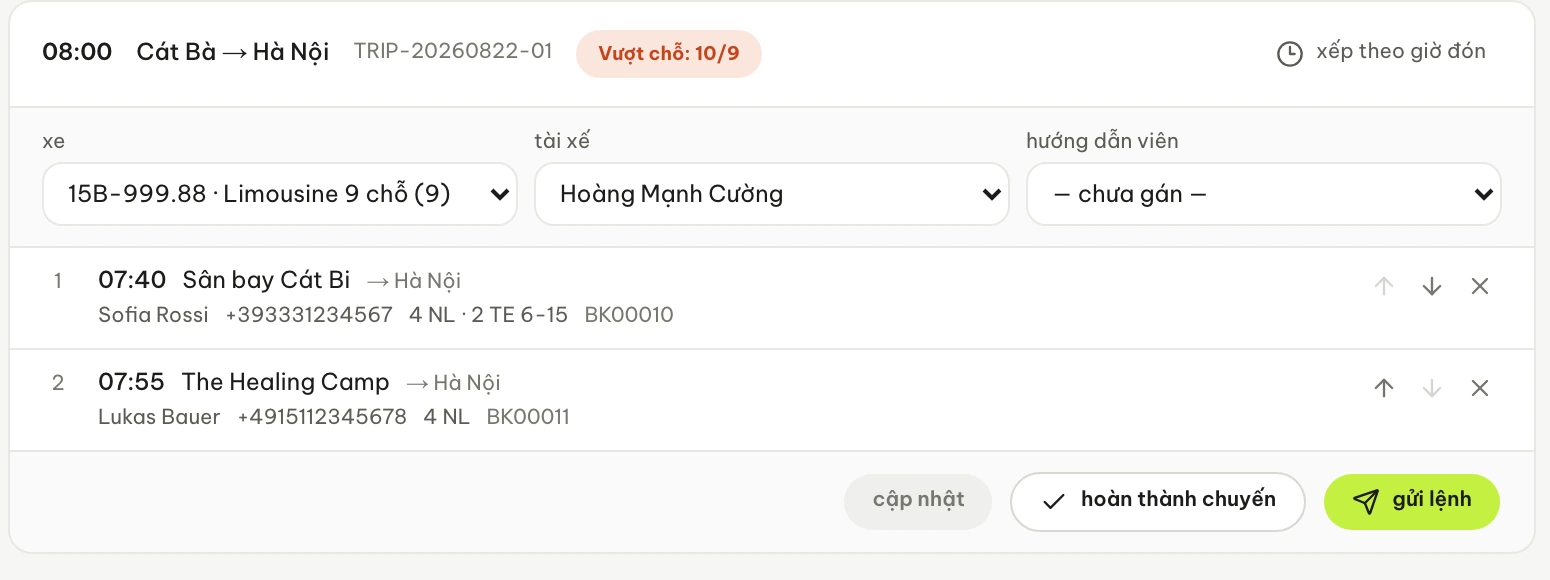
- Dispatch: which trip runs at what time, which vehicle, which person.
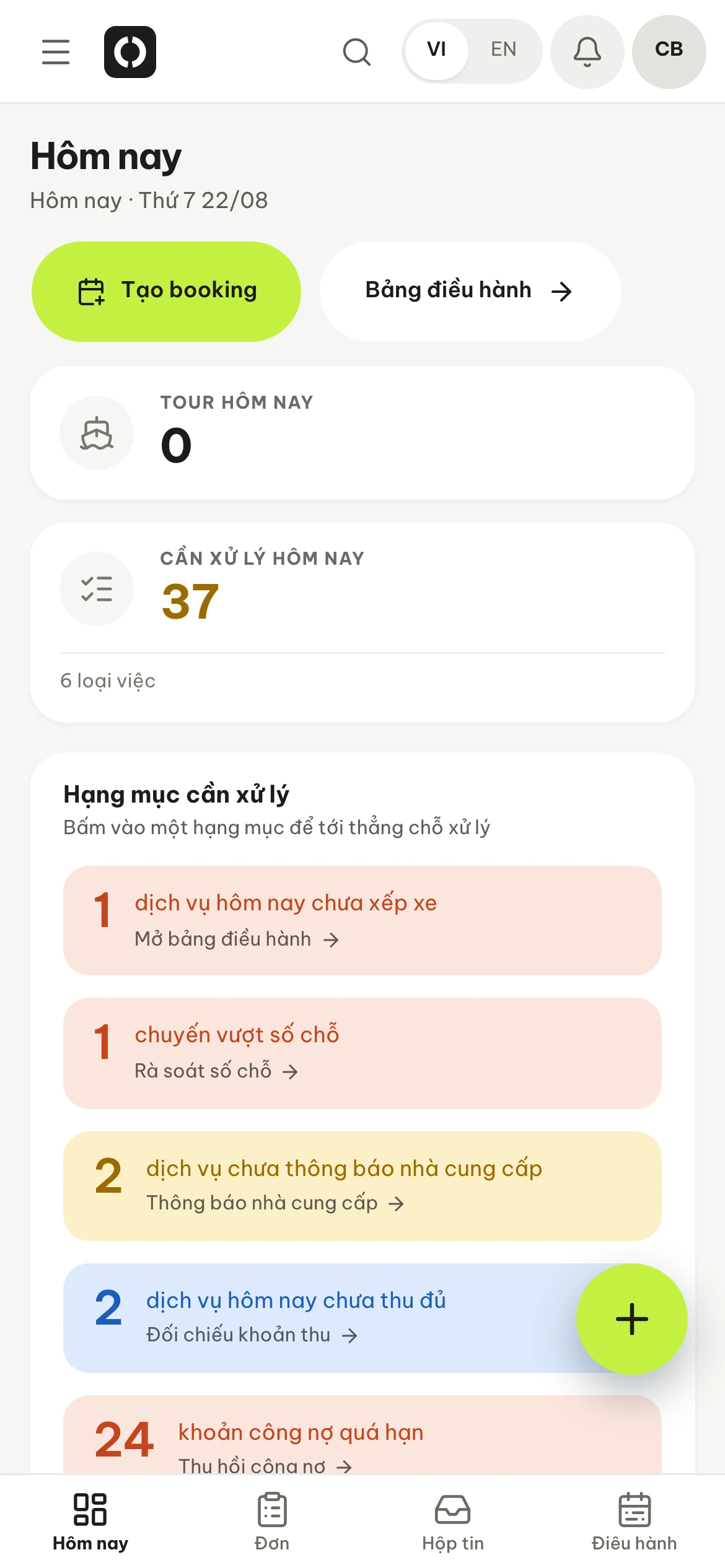
- The people doing the work: who is holding the job, and who is holding money collected on the company's behalf.
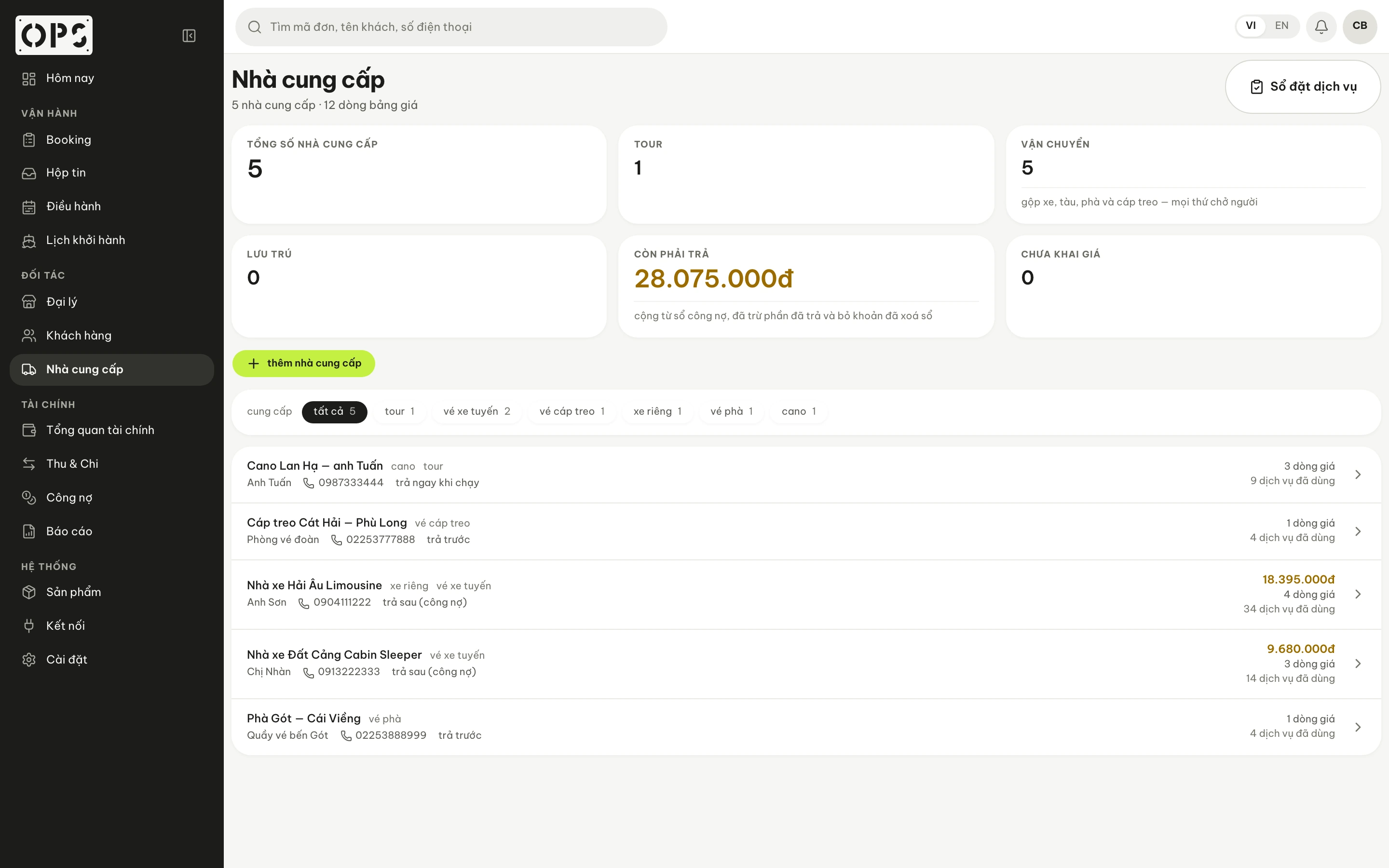
- Suppliers: what has been booked with them, and how much is still owed.
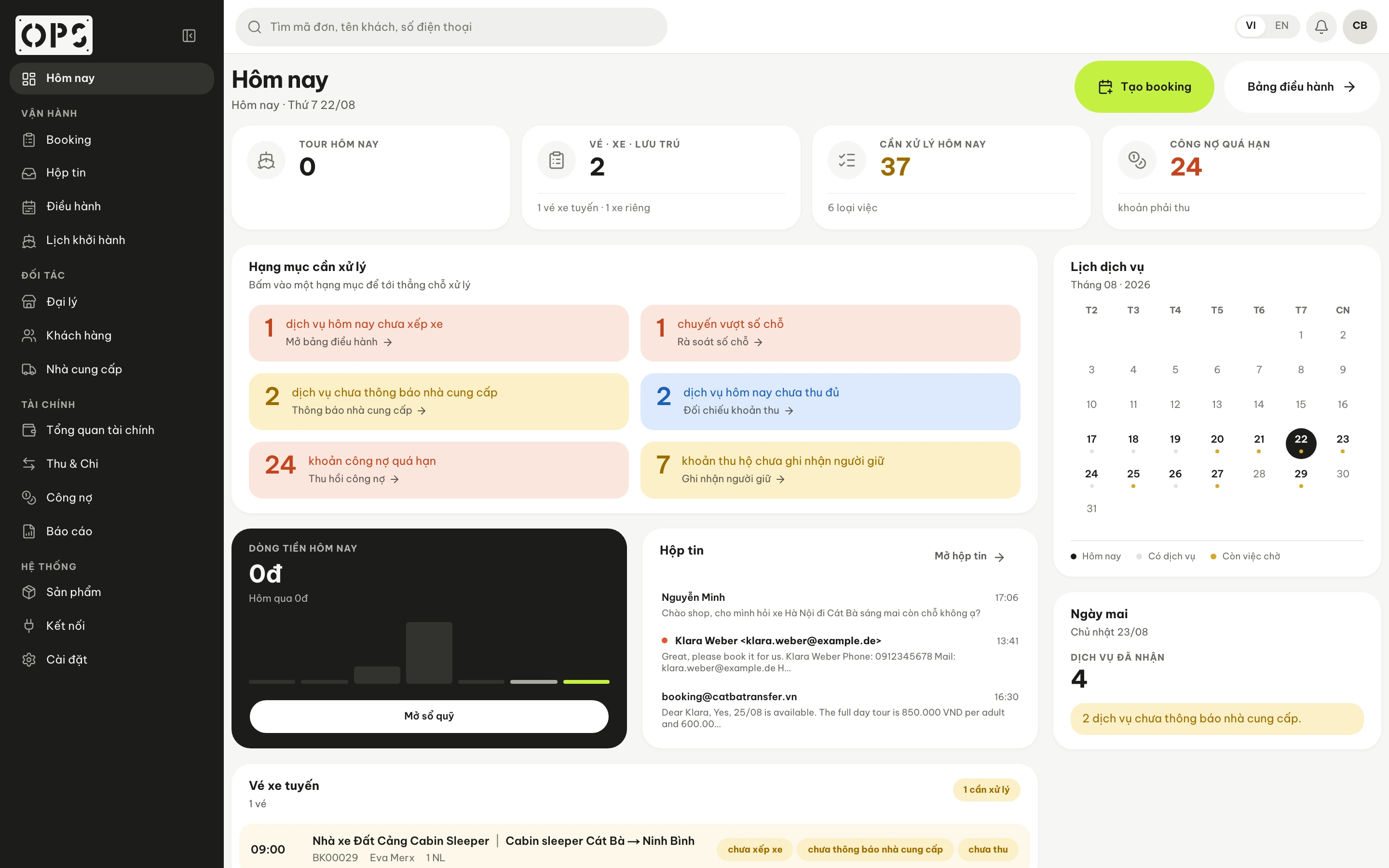
- Money: collected, still to collect, still to pay.
Kéo ngang để xem hết ảnh →
Why Cát Bà shows this so plainly
Here the services lean hard on each other: the van waits for the boat, the boat waits for the guests, the hotel waits on check-out time. Everything happens inside a single day, so one trip running thirty minutes late means several places change plans at once.
Kéo ngang để xem hết ảnh →
Câu hỏi thường gặp
Do we have to stop using Zalo or Excel?
No. The talking still happens where everyone is used to it; what Opsby holds is what has been settled — which service, who does it, how much has been collected, who is still owed. Opsby does not plug into Zalo or Excel: once something is agreed, the person responsible writes it into Opsby.
Is Opsby accounting software?
No. Opsby looks at money from the operations side: how much has actually been collected on this booking, who still owes, which supplier is still to be paid, and who is holding collected cash that has not been handed over yet. The books stay with your accounting team.
Can staff see cost and margin?
Only people with permission to see cost see cost, margin and margin rate, and the business sets that permission itself. Other roles still arrange trips, assign people and record money in and out, without those two numbers on screen.
Does Opsby fit if we are not in Cát Bà?
Cát Bà is where the problem shows up most clearly, not the only place it exists. Anywhere a single order passes through several services, several people and several suppliers before it closes out in money, the same gap is there.
The way you run it stays yours
Opsby only takes on the connecting part between those steps, and closes it out in money. Who decides, and in what order things get done, stays the way you built it.