About Opsby
We ran the operation first and wrote the software after
Opsby was built on Cát Bà, out of the everyday work of a travel and transport business: bookings arriving from several places at once, people and vehicles to assign, suppliers to deal with, and then the end of the month, working out what has been collected, what is still to collect and what is still to pay.
A morning on Cát Bà
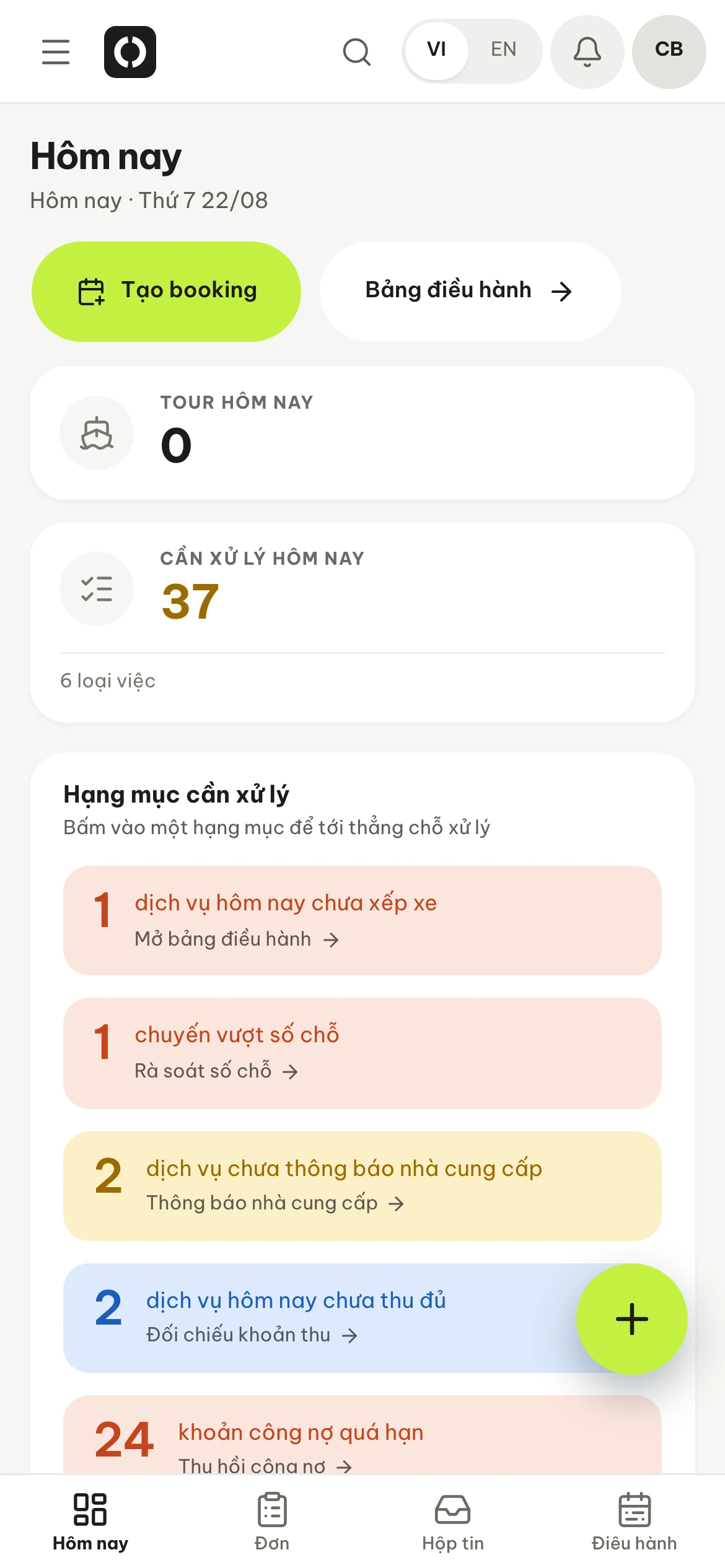
Cát Bà is an island in the Gulf of Tonkin, next to Ha Long Bay. In high season a morning tends to open with a dozen things still unfinished: a guest who confirmed late, a trip carrying more people than seats, a supplier asking about money. The hard part is not any one of them, but that each one sits somewhere different: one person's head, someone else's messages, a third person's file. The first screen we built for ourselves only had to answer one question: what is still open today.
Kéo ngang để xem hết ảnh →
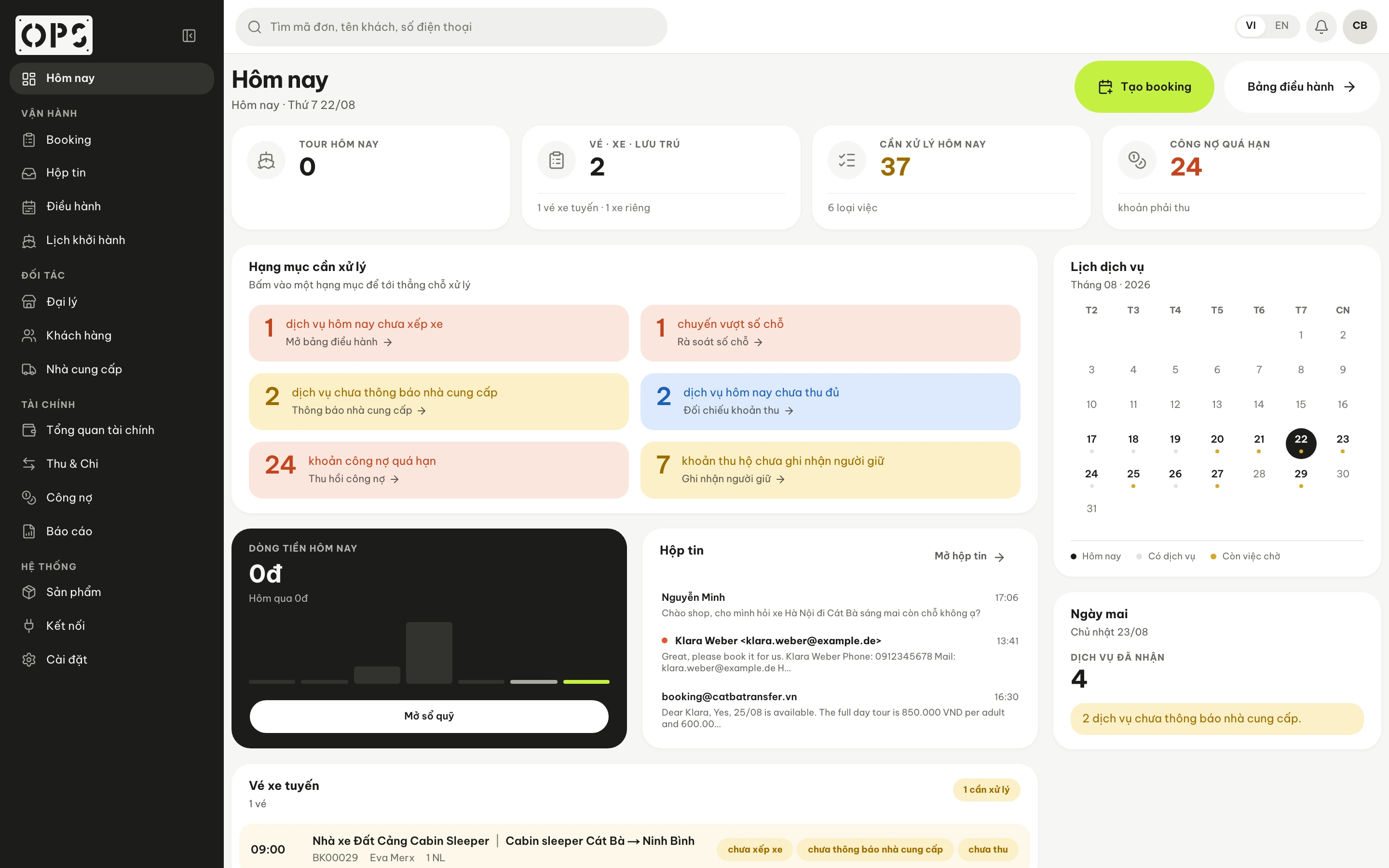
This trade shows the problem plainly
One guest passes through several different services, delivered by several different parties, packed into a few days.
- One booking touches several parties: vehicle owners, boat owners, guesthouses, guides.
- Changes arrive late: pickup moved, people added, a different pickup point.
- The people delivering the service are out in the field, taking the work over the phone.
- Money comes up outside the office: guests paying on the spot, staff holding cash.
Kéo ngang để xem hết ảnh →
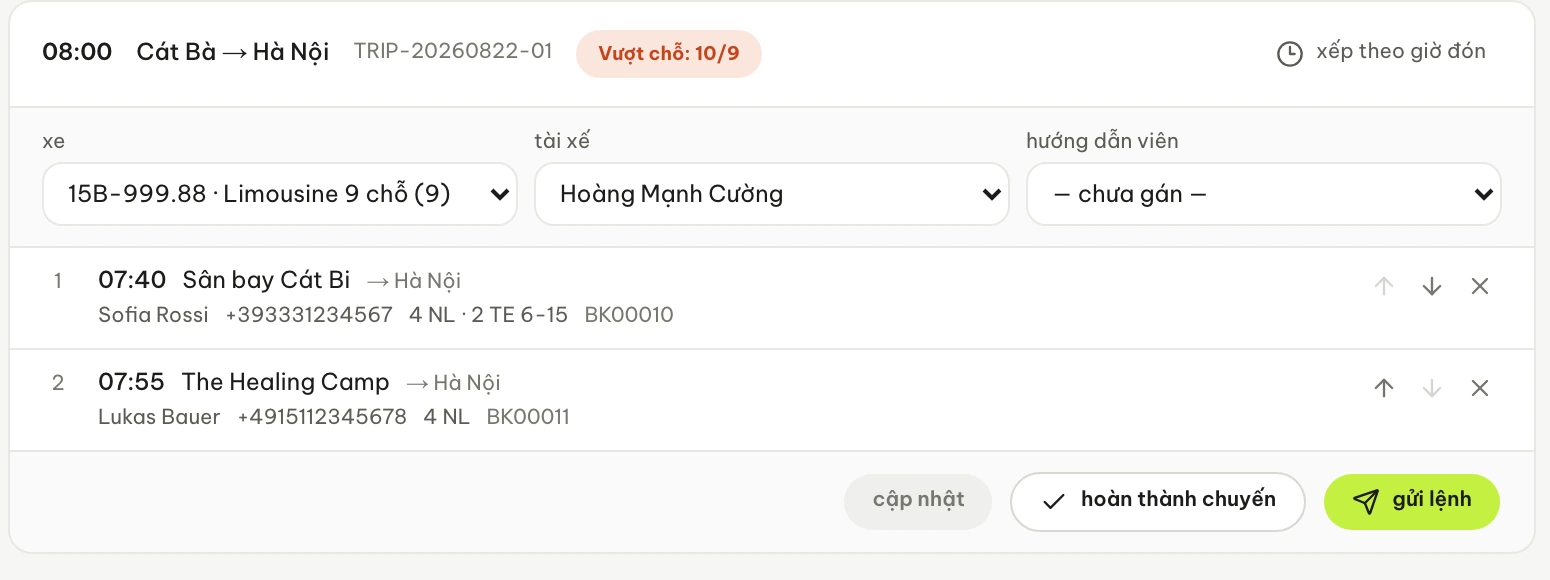
Built on the vocabulary of the work
The words on the screen are the words people already use with each other outside the office, not translated out of some other set of concepts.
- Leg · trip · trip code
- Service · supplier · status
- Received · still to collect
- Collected on behalf · advances outstanding
- Still payable
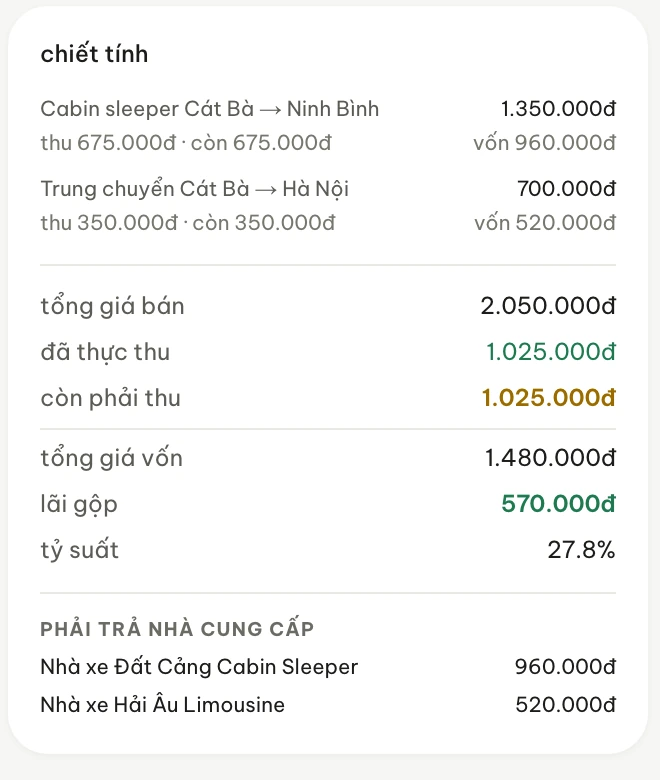
Money is recorded where it comes up
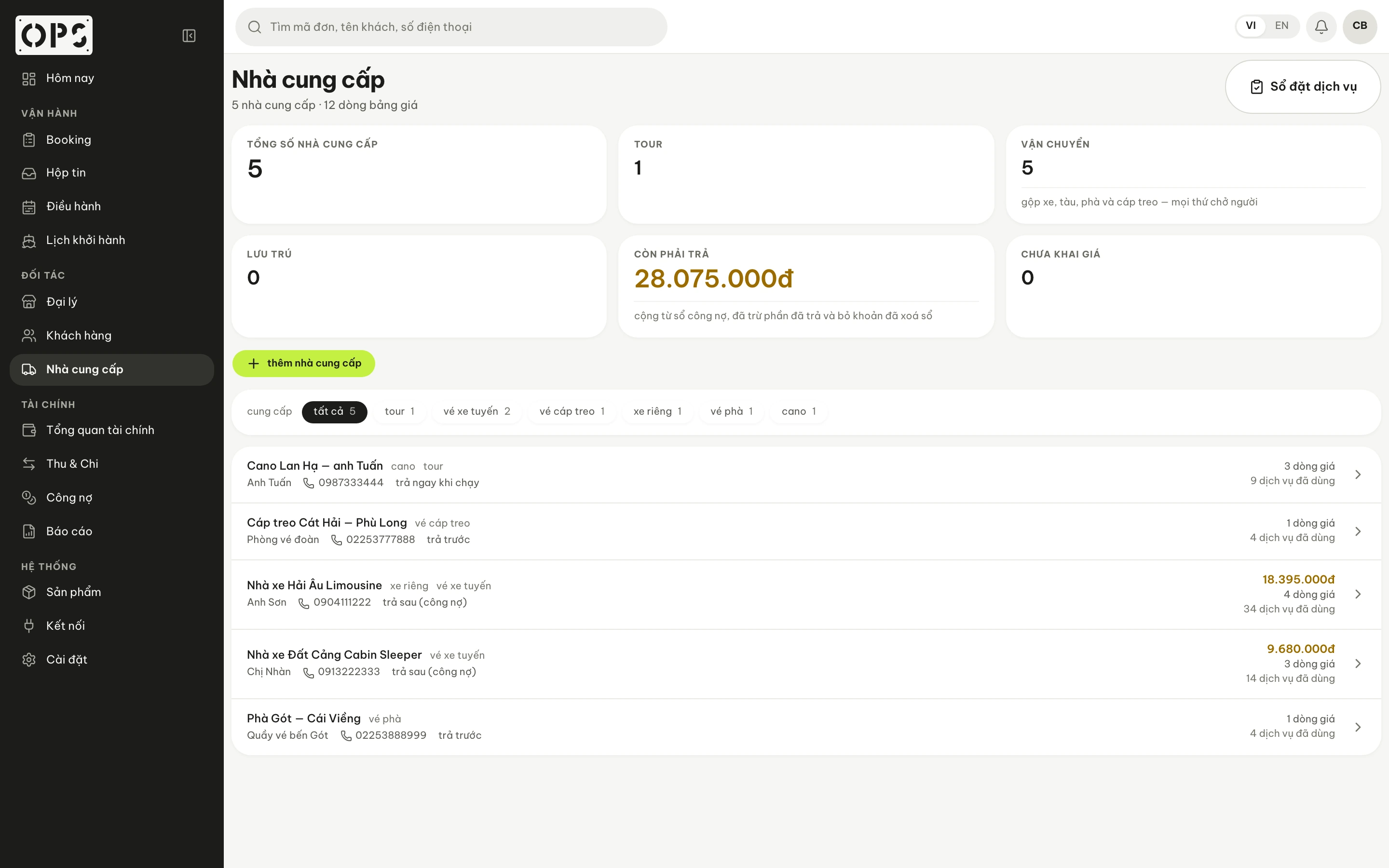
Each booking carries its own breakdown: total selling price, received, still to collect, and what is payable to each supplier. Total cost, gross margin and margin sit in the same place, but they only show for people whose role allows them to see cost.
Alongside the first businesses
We are working with a small number of businesses, each one organized its own way — no ready-made list is right for everyone, so what gets set up belongs to the business.
- Listen first: where bookings come from, who schedules, who drives, when the money is settled.
- Set up what is real: your own routes, services, suppliers and payment terms.
- Permissions by role: who can see cost, who only sees their own part of the work.
- Take the feedback while the work is running and fix things in the order they come up.
Kéo ngang để xem hết ảnh →
Opsby is early
The product is in use for real work every day. We go slowly with few customers, so that every change starts from a situation that actually happened in the field. At this stage we need people who will say plainly what is not good enough, more than we need new accounts.
Câu hỏi thường gặp
Is Opsby accounting software?
No. Opsby is an operations layer: the booking, its services, the people delivering them, the suppliers and the money of that same order sit next to each other, so you are not hunting when you need to know who still owes you and who you still owe. The books stay with the accounting team.
We run on Excel and Zalo. Do we have to give them up?
No. Excel is good at calculation and Zalo is good at people talking to each other. What Opsby holds is the part that needs one shared record: whose order this is, who is working on it, how much has been received, who is still to be paid — each person sees the part their role covers, and cost and gross margin show only for people whose role allows them to see cost.
Do the supplier list and the payment terms come ready-made?
No. Suppliers, services and payment terms are all entered by the business; we sit with you for the first set-up, but what goes into it is your decision.
Is Opsby for tours or for transport?
Both run on the same set of concepts: booking, service, trip, the person delivering it, supplier, money. What differs is which part you lean on: some places lean on dispatching trips and drivers, others on suppliers and on what is still to collect and still to pay.
How do we start?
With one session looking at the work you do now, through to the month-end reconciliation. After that, both sides have enough to say whether Opsby fits, and if it does, which part to use first.
If this sounds like your own week
Tell us where it is tightest: taking bookings, dispatching, dealing with suppliers, or reconciling the money at the end of the month.