Solutions
The jobs are similar. The way you organize them isn't.
Four shapes of operation we run into often: tour operators, travel agencies, scheduled bus and shuttle lines, fleets and driver co-ops. Read the part closest to how you already work.
One booking pulls in several suppliers and several things left to confirm
The guest agrees to a program, and you still have to confirm it with the boat, the van, the guesthouse, the restaurant — each with its own confirmation, its own price, its own payment date. So one booking ends up spread out: the selling price in one place, the buying price in another, the confirmation status in the head of whoever is holding the booking.
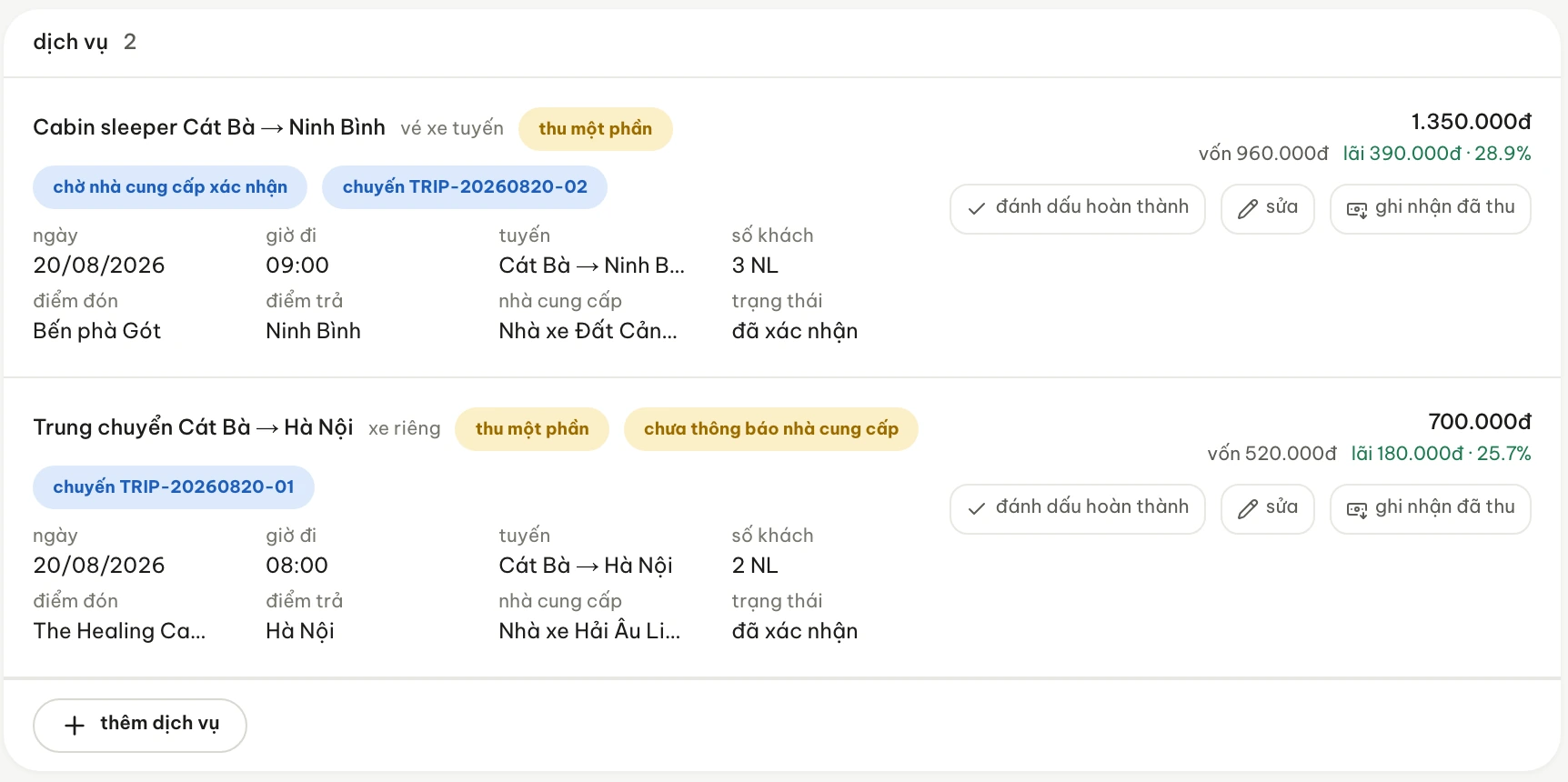
- Every service on a booking stands as its own line: supplier, trip code, state. Two services of different kinds still sit next to each other.
- For people with permission to see cost figures, the service line also shows cost, profit and margin.
- Suppliers are a list your own business enters, with payment terms and the amount still owed.
- Someone taking a booking over halfway through can read where it stands, instead of starting the questions over.
Kéo ngang để xem hết ảnh →
You resell someone else's service, so what you keep depends on what you paid for it
You take the guest, then book the service from someone else, so revenue on its own says little: what you have left sits behind the cost and behind what is payable to each supplier. Money committed to suppliers is scattered through booking confirmations; by the time you can put both halves together it is usually month end, while a quote has to be answered today.
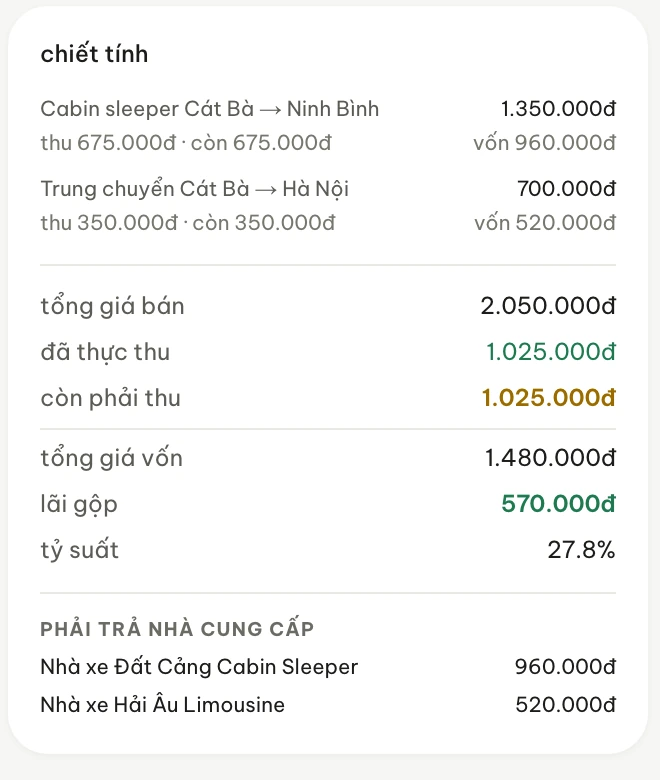
- Each booking has a breakdown card: total selling price, collected, still to collect.
- What is payable to each supplier sits inside the booking, next to what the guest still owes.
- For people with permission to see cost figures: total cost, gross margin and margin for that same booking.
- When the guest changes or adds a service, you read the booking's figures again on that same breakdown card.
Passengers join and leave along the route, and the pickup list changes until the last minute
The trip runs to a fixed time; the passengers don't. One changes the pickup point, one cancels once the vehicle has already pulled out. So the pickup list exists in several versions at once, and the one the driver is holding is not always the newest. Each trip's list stays on that trip's card; people given access to the trip read it and edit it in the same place.
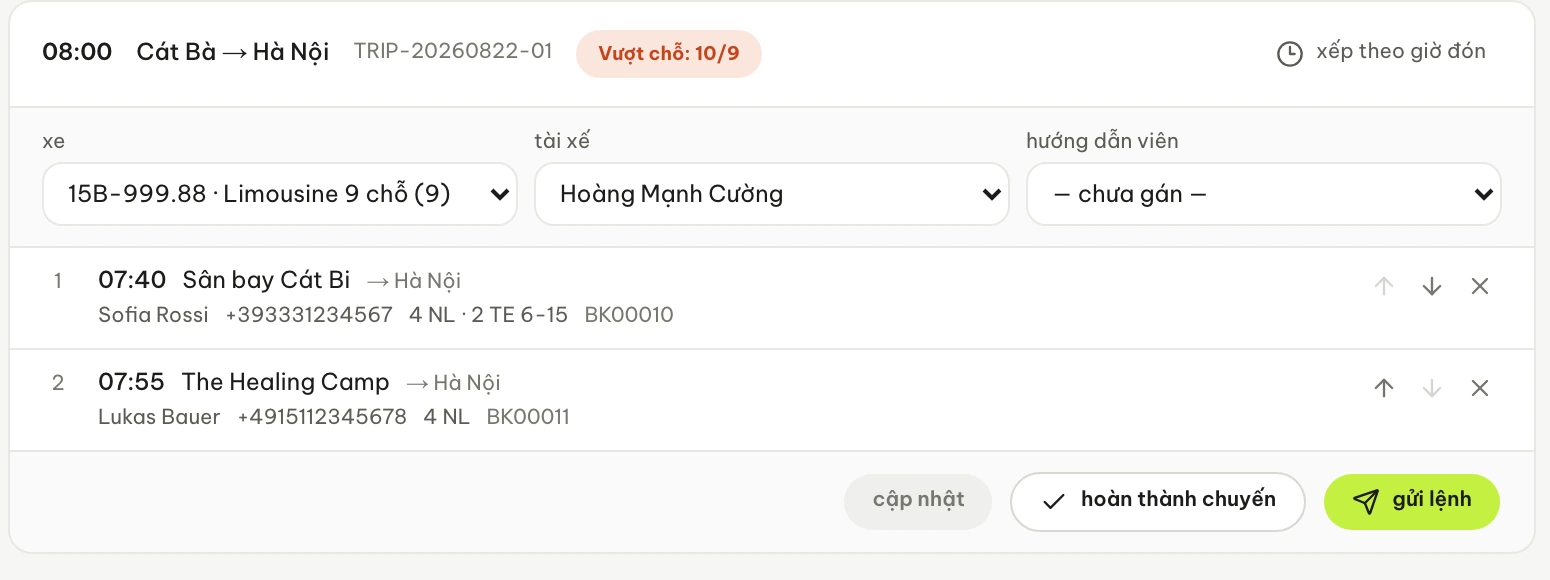
- Each trip is one card: departure time, route, trip code.
- Pickup points are ordered by the times as they were entered.
- Take more passengers than seats and the trip card shows the warning right there — 10/9, for example.
- Vehicle and driver are chosen on the trip card, so you can see which trip is still short of someone.
Kéo ngang để xem hết ảnh →
Many people in charge, money advanced and money collected on the road
The vehicles run scattered and each person in charge covers their own part: one advances cash for fuel, one holds what the passenger paid on the spot. By the end of the day, the money out on the road is the hardest number to read: it sits in messages and in each person's memory.
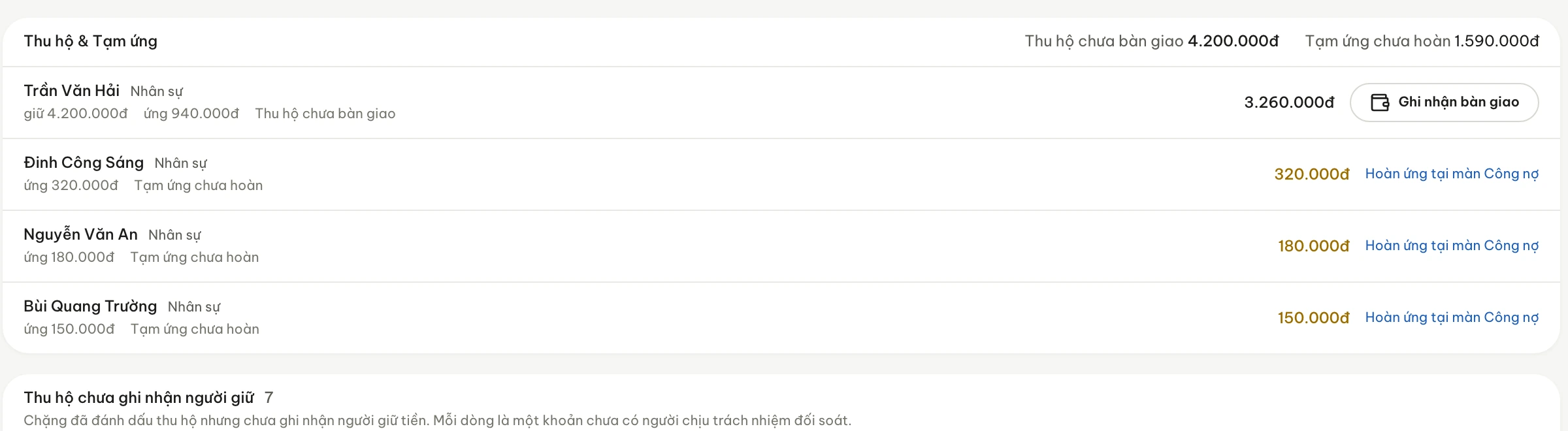
- One line per person: how much collected money they are holding, how much of their advance is still unsettled.
- A cash hand-over is recorded where it happens, so afterwards there is a marker to reconcile against.
- Money in, money out and what is left for the period sit on the same screen.
- Collected money with no holder recorded yet is counted on its own.
Kéo ngang để xem hết ảnh →
Four ways of working, one chain of jobs
The four groups above get stuck in four places, but the chain of jobs has the same shape: booking · services · dispatch · the people doing the work · suppliers · money. Opsby is the layer that keeps that chain connected; the order you work in and the way you divide the roles stay yours.
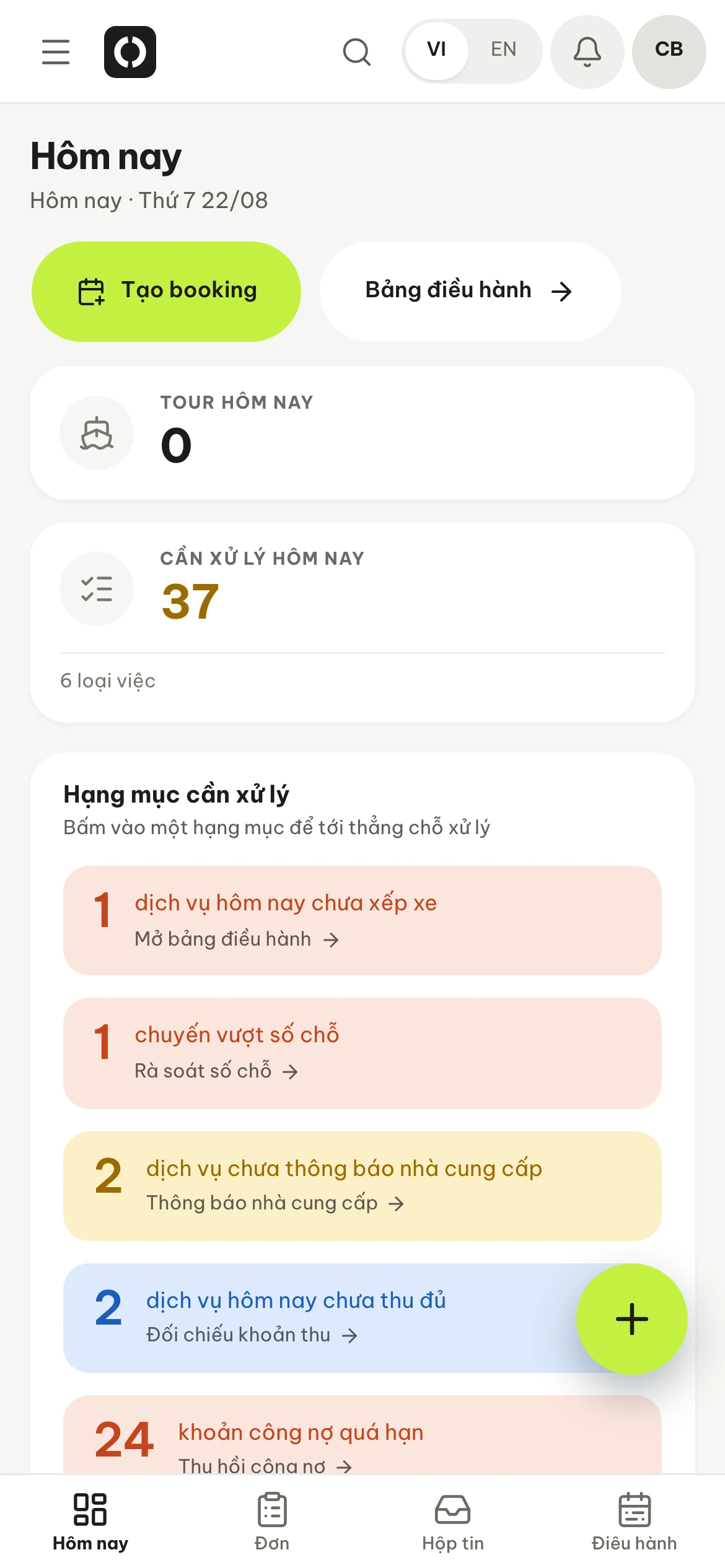
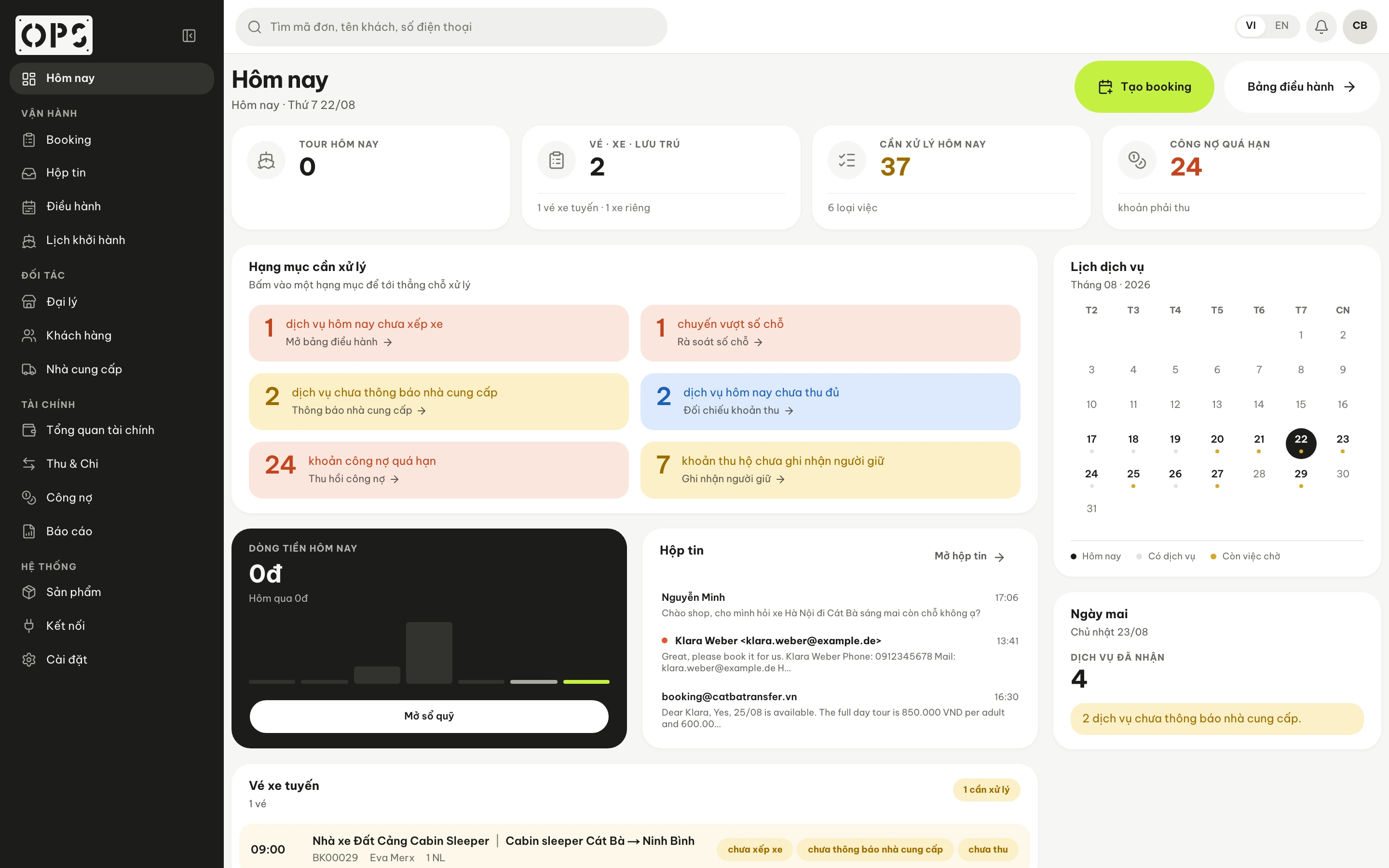
- Work that is waiting is gathered on one Today screen, split by kind of job.
- Clicking a kind of job takes you straight to where it is handled.
Kéo ngang để xem hết ảnh →
Walk us through how your business actually runs
The clearest way to tell is to describe the real chain of jobs: where the bookings come from, who settles with the suppliers, who holds the cash, where you read your numbers at the end of the day. Leave us a message, we look at the real screens, and you judge for yourself.